Couple Poses: The Complete Guide to Picture-Perfect Photos Together
Last month, my partner and I spent an embarrassing amount of time trying to take a decent anniversary photo. We cycled through at least thirty awkward attempts before finally capturing something that didn’t look like two strangers forced to stand together. Sound familiar?
Whether you’re planning engagement photos, updating your social media, or simply want to capture beautiful memories together, knowing the right couple poses can transform your photos from stiff and awkward to natural and stunning.
Today, I’m sharing everything I’ve learned about couple poses—from classic romantic positions to candid, natural-looking shots that actually feel comfortable to do. No professional photographer required.
Key Takeaways
- Natural, candid couple poses photograph better than stiff, formal positions
- The best poses involve genuine interaction and movement
- Body angles and positioning dramatically affect how flattering photos look
- Different poses work better for different relationship stages and comfort levels
- Lighting and location matter as much as the pose itself
- Practice makes perfect—expect the first few attempts to feel awkward
Why Most Couple Photos Feel Awkward (And How to Fix It)
Before we dive into specific couple poses, let’s address the elephant in the room: why do photos of couples so often feel forced and uncomfortable?
The problem isn’t you—it’s that traditional “say cheese” photography goes against how humans naturally interact. When was the last time you and your partner just stood side-by-side staring at nothing? Exactly.
The Psychology Behind Natural-Looking Poses
Great couple poses work because they mimic real moments of connection. When I finally figured this out, my photos improved dramatically. Instead of thinking “we need to pose,” I started thinking “we need to interact.”
What makes poses feel natural:
- Movement and action rather than static positioning
- Genuine emotional connection between partners
- Comfortable physical proximity that matches your relationship
- Focus on each other rather than the camera
- Relaxed body language without forced smiles
The Essential Couple Poses Every Couple Should Master
After analyzing hundreds of couple photos and experimenting extensively, I’ve identified the poses that consistently produce stunning results.
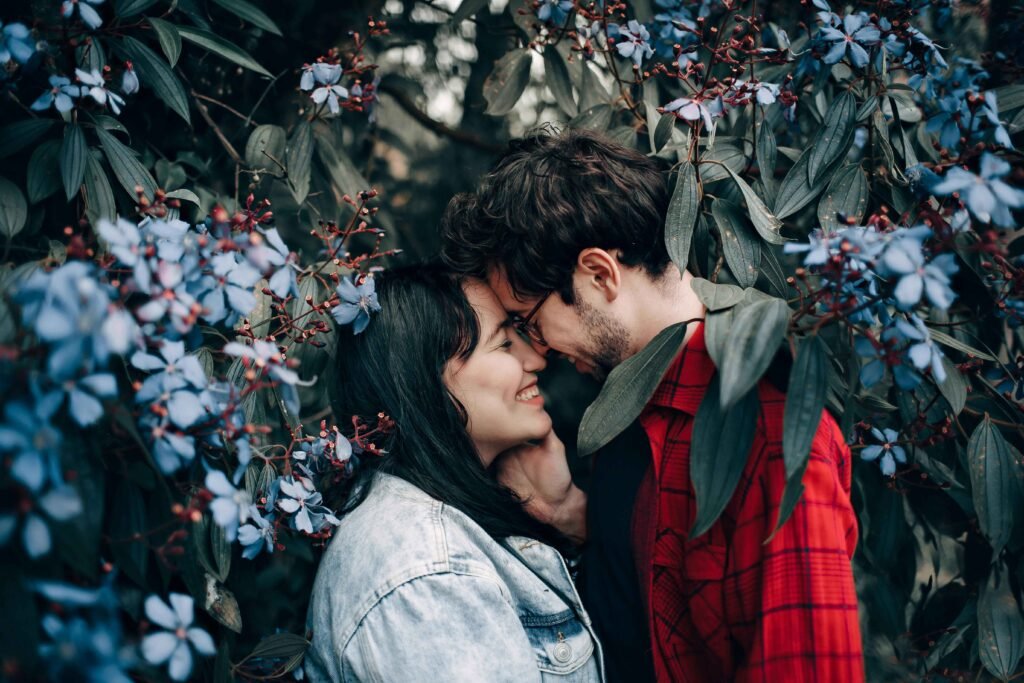
1. The Forehead Touch
Stand facing each other, lean in, and gently touch foreheads while closing your eyes or looking down. Your hands can rest on each other’s arms, waist, or face.
Why it works: Creates immediate intimacy without requiring you to stare directly at the camera. The closed eyes eliminate the “where do I look” problem.
Pro tip: Take several shots while you naturally shift your weight—the slight variations create the most genuine-looking images.
2. The Walking Shot
My personal favorite for looking natural. Walk hand-in-hand, arm-in-arm, or with one partner slightly ahead looking back. The key is to actually walk, not freeze mid-step.
Why it works: Movement creates authentic expressions and eliminates stiffness. You’re focused on walking together rather than “performing” for the camera.
Pro tip: Walk the same path multiple times. By the third or fourth pass, you’ll relax into natural rhythm.
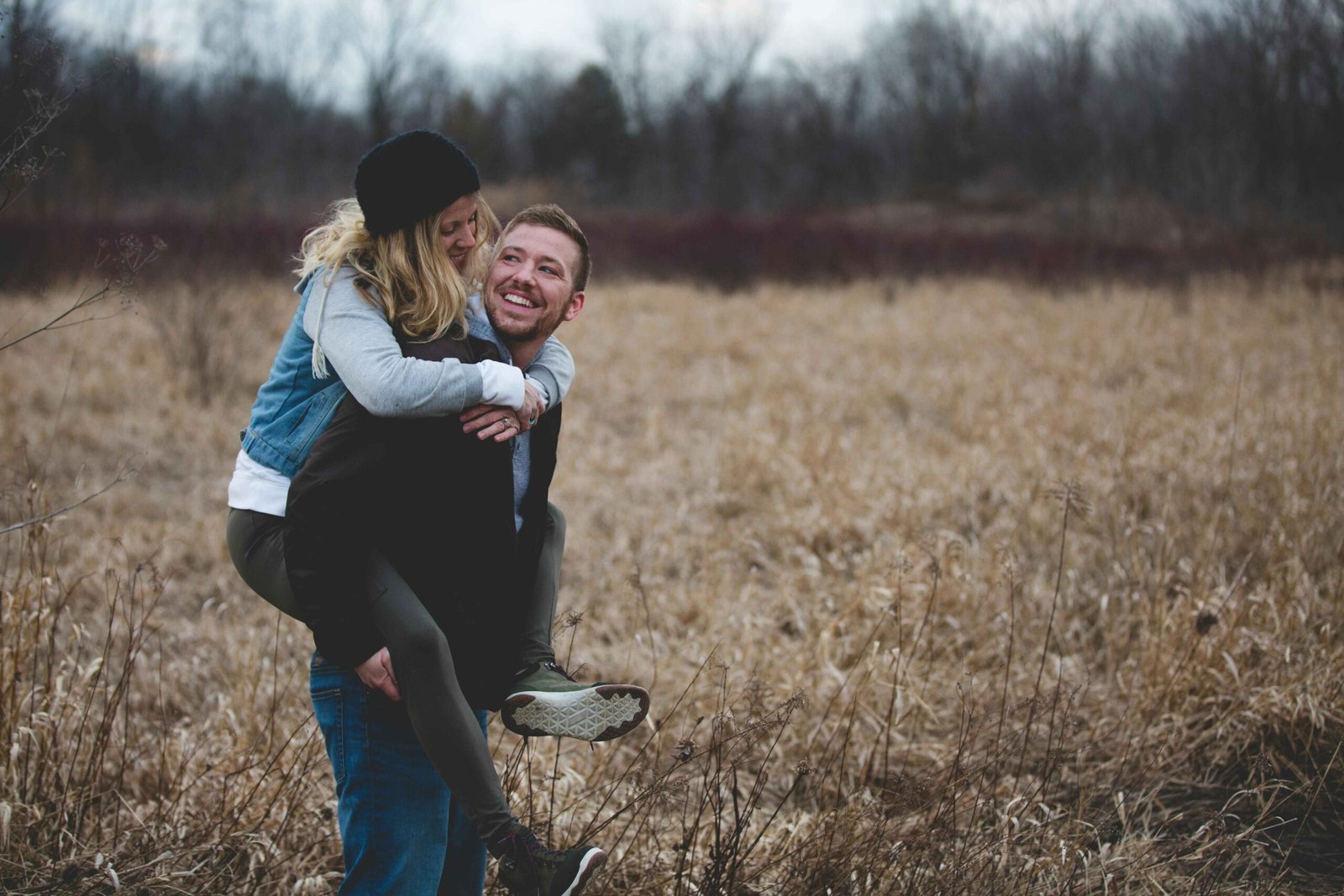
3. The Piggyback Pose
One partner climbs on the other’s back while both laugh and enjoy the moment. This works best when you’re both genuinely having fun with it.
Why it works: Impossible to look stiff when you’re laughing. Creates dynamic energy and shows your playful side as a couple.
Pro tip: The person giving the piggyback should bend slightly at the knees and lean forward—it’s more comfortable and creates better angles.
4. The Over-the-Shoulder Look
One partner stands in front, the other behind with arms wrapped around from behind. The front person looks back over their shoulder at their partner.
Why it works: Incredibly flattering for both people. The front person gets a slimming angle, while the back person’s face is partially visible, creating intrigue.
Pro tip: The person in back should position their face close to their partner’s shoulder—too far away creates awkward distance.
5. The Sitting Cuddle
Sit close together on steps, a bench, or the ground. One person can sit between the other’s legs, lean against them, or sit perpendicular with legs draped over.
Why it works: Sitting naturally relaxes body language. The casual positioning reads as intimate without trying too hard.
Pro tip: Avoid sitting perfectly upright—lean into each other, creating triangular shapes with your bodies rather than parallel lines.
6. The Candid Laugh
Stop trying to pose and just make each other laugh. Tell inside jokes, reminisce about funny memories, or playfully tease each other while the camera captures genuine reactions.
Why it works: Authentic joy is impossible to fake and always photographs beautifully. These often become favorite photos because they capture real connection.
Pro tip: Have someone take multiple rapid-fire shots while you interact—you’ll get natural expressions you couldn’t stage.
Location-Specific Couple Poses
The setting dramatically influences which poses work best. Here’s what I’ve learned about matching poses to locations.
Beach Couple Poses
Try walking at the water’s edge barefoot, sitting together watching the sunset, or playful poses like running through shallow water. Golden hour (the hour before sunset) provides the most flattering light.
Urban/City Couple Poses
Use architectural elements creatively. Lean against brick walls, sit on stoops, or walk through interesting doorways. My favorite: finding a colorful wall or mural for background contrast while you focus on each other.
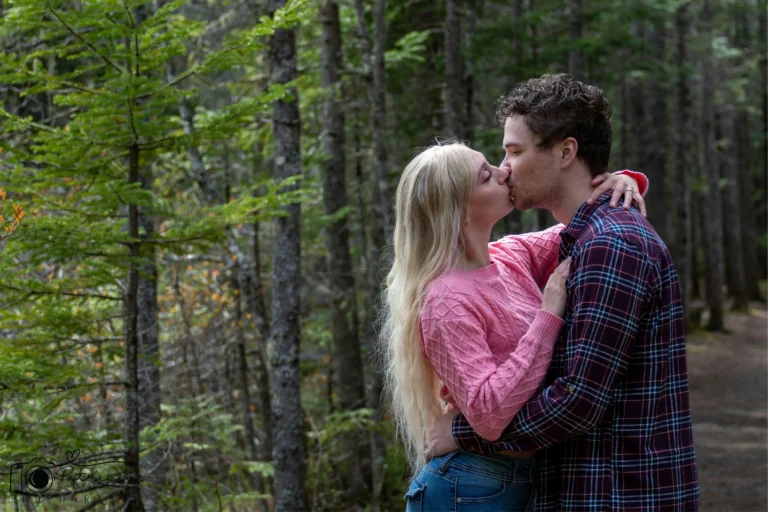
Nature/Forest Couple Poses
Walk along trails, sit against tree trunks, or position yourselves in clearings with dappled light. Use depth—position yourselves with significant background distance to create that beautiful blurred effect.
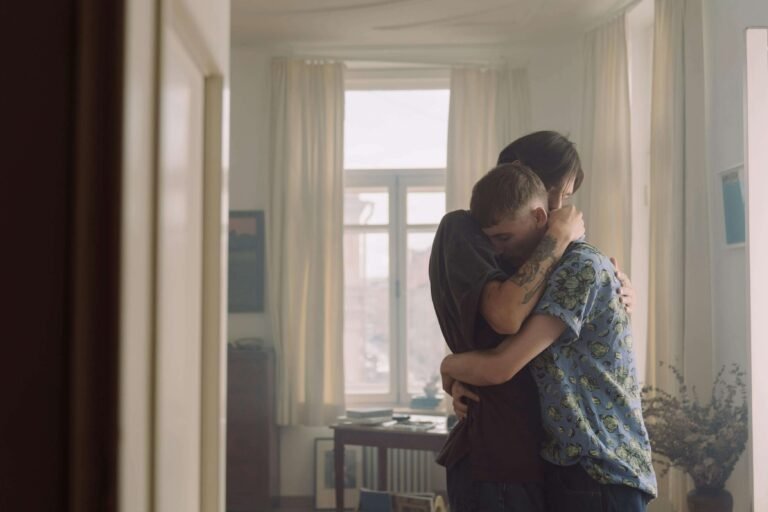
Home/Indoor Couple Poses
Try cooking together in the kitchen, cuddling on the couch, or dancing in the living room. Window light is your best friend for soft, flattering illumination.
Common Couple Pose Mistakes (And How I Fixed Them)
Through plenty of trial and error, I’ve made every mistake in the book. Here’s what to avoid:
Mistake #1: Matching Heights Exactly
The problem: When both partners stand at exactly the same height, photos lack visual interest and can look stiff.
The fix: Create slight height variations. One person can pop a hip, step slightly forward, or turn their body at an angle.
Mistake #2: Death Grip Hands
The problem: Holding hands too tightly creates tension visible in photos—white knuckles, stiff arms, and uncomfortable expressions.
The fix: Hold hands loosely and naturally, as you would during a casual walk. Better yet, interlock fingers or let hands rest gently.
Mistake #3: Fake Smiles on Command
The problem: “Smile!” rarely produces genuine expressions. Forced smiles look forced in photos.
The fix: Talk to each other, share memories, or have the photographer tell jokes. Capture real moments of joy rather than manufactured expressions.
Mistake #4: Staying Too Far Apart
The problem: Physical distance in poses reads as emotional distance in photos.
The fix: Get closer than feels natural at first. The camera adds apparent distance, so what feels like “too close” often photographs perfectly.
Advanced Tips for Different Body Types
Not every pose works for every couple, and that’s perfectly fine. Here’s how to adapt poses for maximum flattery.
For Height Differences
Sitting poses, stairs (shorter partner on higher step), piggyback rides, and shots where the taller partner sits while the shorter stands work best. My partner is eight inches taller than me, and we’ve found that walking shots where I’m slightly ahead create the most balanced compositions.
For Plus-Size Couples
Angles and movement are your friends. Three-quarter angles rather than straight-on shots, walking poses, and positions that create space between the body and arms work beautifully. Confidence matters more than body type—poses where you feel comfortable will always look better.
For Camera-Shy Partners
Start with poses focused on activities (walking, dancing, looking at each other rather than the camera), back-to-camera shots, and silhouettes. Build confidence with non-camera-facing poses first, then gradually introduce camera-aware positions.
The Technical Side: Making Poses Look Professional
Even great poses can fall flat with poor execution. Here are the technical elements that elevate couple poses from snapshots to stunning photography.
Lighting Fundamentals
Natural light during golden hour creates warm, flattering tones. Overcast days provide soft, even lighting without harsh shadows. Avoid midday sun, which creates unflattering shadows. Position yourselves so light falls on your faces, not behind you.
Camera Angles Matter
Slightly elevated angles (photographer shooting from slightly above eye level) tend to be universally flattering. Avoid extreme low angles or extremely high angles.
Background Consideration
Look for clean, simple backgrounds or use depth-of-field to blur distracting elements. Always check behind you for telephone poles or trees that might appear to be “growing out of your heads.”
Couple Poses FAQ
What are the most flattering couple poses?
The most flattering couple poses involve slight angles rather than straight-on positioning, create space between bodies and arms, and include genuine interaction between partners. Walking shots, forehead touches, and over-the-shoulder looks consistently produce attractive results across different body types and comfort levels.
How do you pose for pictures without looking awkward?
Focus on genuine interaction rather than “posing.” Move, laugh, talk to each other, and let the camera capture real moments. The more you think about the camera, the stiffer you’ll look. Treat the photo session as quality time together that happens to be documented.
What should couples do with their hands in photos?
Hands should be doing something natural—holding each other loosely, touching your partner’s face or arms, resting in pockets, or naturally falling at your sides. Avoid stiff, purposeless hand positions. When in doubt, let hands gently interact with your partner.
Should we look at the camera or each other?
Both! Variety creates a more interesting photo collection. Mix shots where you both look at the camera, both focus on each other, and one looks at the camera while the other looks at their partner. The “both looking at each other” shots often feel most authentic and romantic.
How do we prepare for a couple photo session?
Coordinate outfits without exact matching (complementary colors and styles work better), discuss which poses you’re comfortable with, scout locations in advance, and plan for golden hour lighting. Most importantly, go into it with a playful attitude—the best photos happen when you’re enjoying yourselves.
How can short couples take better photos together?
Use sitting poses, stairs or elevation changes, and angles that don’t emphasize height. Focus on closeness and intimacy rather than full-body shots. Many romantic couple poses work beautifully regardless of height because they emphasize connection over stature.
My Personal Approach to Couple Poses
After countless photo sessions with my partner, I’ve developed a system that works consistently:
Start with movement: We always begin with walking or dancing poses to loosen up and stop thinking about the camera.
Progress to interaction: Once we’re relaxed, we move into poses that involve genuine interaction—laughing together, telling stories, recreating favorite memories.
End with classics: By this point, we’re comfortable and loose, making traditional romantic poses feel natural rather than forced.
Review and adjust: We check photos periodically, noting what works and what doesn’t for our particular dynamic and body types.
This progression from activity to intimacy has transformed our photo sessions from dreaded obligations into fun experiences together.
Final Thoughts on Mastering Couple Poses
The secret to great couple poses isn’t memorizing fifty different positions—it’s understanding that the best photos capture genuine connection. Whether you’re planning engagement photos, updating your Instagram, or simply documenting your journey together, remember that authenticity beats technical perfection every time.
Start with the basic poses I’ve outlined, adapt them to your comfort level and body types, and don’t be afraid to experiment. Your first attempts might feel awkward (mine certainly were), but with practice, you’ll develop an instinct for what works for you as a couple.
The photos that will mean the most to you years from now won’t necessarily be the most technically perfect ones—they’ll be the ones that genuinely capture who you are together in this moment. So relax, have fun, and let your real relationship shine through.
What’s your favorite couple pose, or what do you struggle with most when taking photos together? Share in the comments below!